
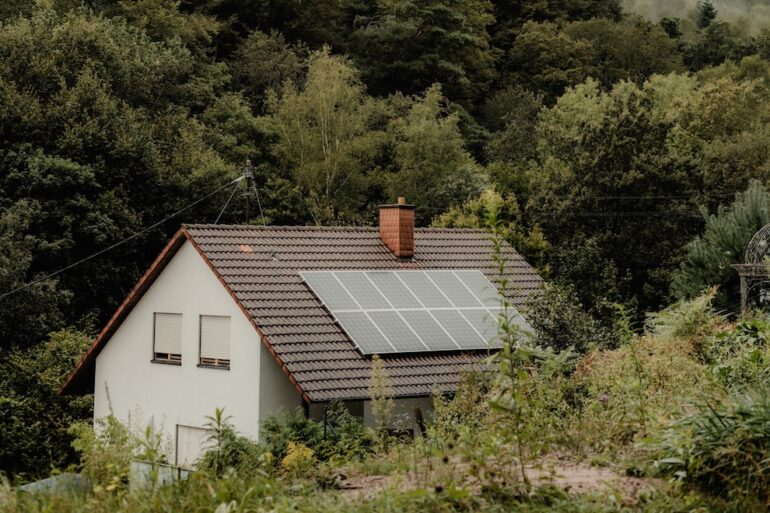
If you’re thinking about going solar, you’ve probably wondered whether the panels are really as “green” as people say. Making them takes energy and materials, and eventually they have to be thrown out or recycled. So what does the full 30 years look like? Here’s an honest look.
The Carbon Cost of Making Panels
Solar panels don’t appear out of nowhere. Mining the silicon, purifying it, making the cells, and shipping the finished panels all use energy. Much of that energy still comes from fossil fuels.
That upfront “carbon debt” gets paid back quickly. Research from the National Renewable Energy Laboratory and others puts the energy payback time for modern panels at about one to three years, depending on where you live. After that, your panels produce clean energy for decades beyond what it took to make them.
Over its whole life, from manufacturing to disposal, rooftop solar produces roughly 40 to 50 grams of CO₂ for each kilowatt-hour it generates. Coal power produces about 820 grams and natural gas about 490.
What 30 Years of Clean Power Adds Up To
Take a typical 7-kilowatt home system making around 7,500–8,000 kWh a year. Panels lose about 0.5% of their output each year, so over 30 years the system would produce roughly 225,000 kWh.
Get Your Energy Independence
If that power replaced electricity from an average U.S. grid mix, it would avoid about 75 to 85 metric tons of CO₂ after subtracting the emissions from making the panels. That’s about the same as not driving a typical gas car for 15 to 18 years.
Your own number depends on how clean your local utility already is. Where the grid runs mostly on fossil fuels, each kilowatt-hour you generate avoids more emissions. Where it relies heavily on hydropower, it avoids fewer, but solar still takes pressure off the grid during peak demand.
Benefits Beyond Carbon
Carbon isn’t the only thing solar saves:
- Cleaner air: Solar produces no sulfur dioxide, nitrogen oxides, or soot, which come from burning fuel and are linked to asthma and heart disease.
- Almost no water use: Coal, gas, and nuclear plants use huge amounts of water for cooling. Rooftop panels only need an occasional rinse.
- No new land needed: Your roof is already there, so no habitat has to be cleared.
What Happens When the Panels Retire?
By weight, panels are mostly glass, aluminum, and copper, and more than 90% of that can be recycled. Recycling programs in the U.S. are still growing, but capacity is rising as more of the first big wave of installations reaches retirement age. Ask your installer how they handle panels at the end of their life. Learn more about recycling old solar panels.
A Clear Cut Clean Energy Win
Over 30 years, a home solar system pays back its carbon cost within the first few years. After that, it keeps dozens of tons of CO₂ out of the air while cutting air pollution and water use. Few upgrades you can make to your home do more for the environment.