
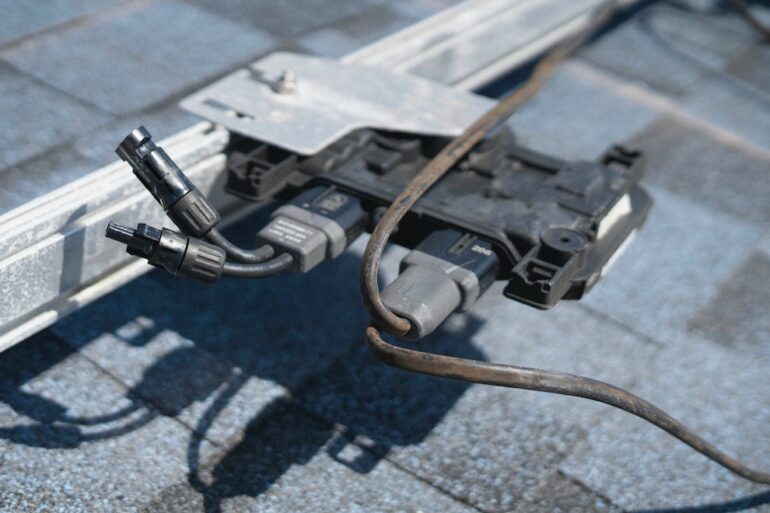
If you’re planning roof repairs, a system upgrade, or you’ve noticed something off with your setup, you might be wondering whether you can simply disconnect your solar panels yourself. The short answer: it depends on what “disconnect” means, and doing it incorrectly can be dangerous.
Not Like Unplugging a Lamp
Solar panels generate electricity anytime they’re exposed to light — even on a cloudy day, even when your system is “off” at the inverter. Unlike most home appliances, you can’t fully de-energize a panel just by flipping a switch at the breaker box. The panels themselves keep producing DC voltage as long as sunlight hits them. That means the wiring between the panels and your inverter can remain live even after you’ve shut down the rest of the system.
This is the core safety issue: DC electricity from solar panels can be dangerous, and PV (photovoltaic) connectors are designed to handle it safely only when used correctly and not under load.
What’s Actually Safe to Do Yourself
- Disconnecting PV connectors (MC4 connectors) between panels: These carry live DC current whenever there’s daylight. Unplugging them under load can cause arcing — a small but genuinely dangerous electrical spark — leading to burns or shock.
- Removing panels from the roof or rewiring the array: This involves live DC circuits, rooftop fall hazards, and system components that can cause fires or equipment damage if mishandled.
- Working on the system after storm damage: Cracked or damaged panels can behave unpredictably electrically.
The Right Approach
If you need to fully de-energize your system — for a roof repair, storm damage, or a system fault — follow the proper shutdown sequence: inverter off, then AC disconnect, then DC disconnect if your system has one. Even then, wiring between panels and the combiner box may still carry voltage, which is why installers recommend covering panels with an opaque tarp if physical disconnection is required — light exposure is what generates the voltage in the first place.
For anything beyond flipping a standard shutoff switch, call a licensed solar installer or electrician. Most systems also have an emergency shutdown label required by code (NEC guidelines in the US) explaining the exact sequence for your setup — check that first.
The Bottom Line
Shutting your system off is safe and normal. Physically disconnecting wiring or panels is a job for a professional, because sunlight alone means the danger doesn’t go away just because you’ve flipped a switch.