
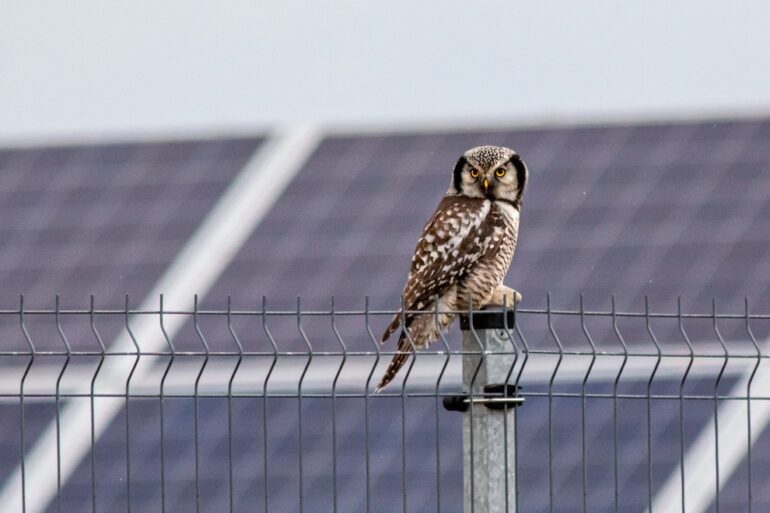
Birds can damage panels, reduce output, and create fire hazards, but you can prevent most problems with physical exclusion (mesh/netting) and targeted deterrents — start with a perimeter barrier and add visual or audio deterrents as needed.
Quick Guide
- Key considerations: Which species are present? What is the slope of your roof? Do you have any warranty constraints? Are there any local wildlife laws that limit your options?
- Clarifying questions: Are birds nesting or just roosting? How large are the gaps under your array? Do you have safe roof access for installation and inspection?
- Decision points: Prioritize physical exclusion (mesh/critter guards) for long‑term protection. Add spikes or visual deterrents where exclusion isn’t feasible. Consider professional installation for safety and warranty compliance.
Comparison of Common Deterrents
| Method | Primary Effect | Cost Range | Durability |
|---|---|---|---|
| Mesh / critter guard | Blocks access under panels | $15-30 per foot installed | High (years of service) |
| Bird spikes | Prevents perching on edges | Low to moderate | Moderate (weather resistant) |
| Visual deterrents | Scare birds away (decoys, reflective tape) | Low | Low (birds acclimate) |
| Audio deterrents | Repels with distress calls | Moderate | Moderate (acclimation) |
| Chemical repellents | Makes surfaces unpleasant | Low | Low (reapply often) |
Get Your Energy Independence
Effective Methods
Physical exclusion is the most reliable solution. Install UV‑stable mesh or a purpose‑built critter guard around the perimeter of the array to prevent nesting and roosting under panels, preserving airflow and preventing droppings and debris buildup. Professional mesh installation is widely recommended because it creates a gap‑free barrier without penetrating panels or voiding warranties.
Edge spikes and perimeter strips work well where birds try to land on racking or parapets; they are humane and low‑maintenance but don’t stop birds from accessing gaps beneath panels.
Visual and audio deterrents (reflective tape, hawk decoys, ultrasonic or distress‑call devices) can reduce activity short‑term but often lose effectiveness as birds habituate; combine them with exclusion for best results.
Regular cleaning and inspection reduce attractants: remove nesting material promptly, clear droppings, and check for damage to wiring or seals. Scheduled inspections also let you repair small gaps before they become nesting sites.
Risks, Legalities & Maintenance
- Wildlife laws: Some species are protected; never remove active nests without checking local regulations.
- Warranty and safety: Avoid drilling into panels or racking; use non‑penetrating attachments and consult your installer to keep warranties valid.
- Ongoing upkeep: Mesh and spikes need periodic checks; visual/audio devices may require replacement or repositioning.
Bottom Line
Start with a professionally installed mesh or critter guard to eliminate the root cause — access under panels — then layer spikes and deterrents as needed; this combined approach protects performance, reduces maintenance costs, and minimizes safety risks.