
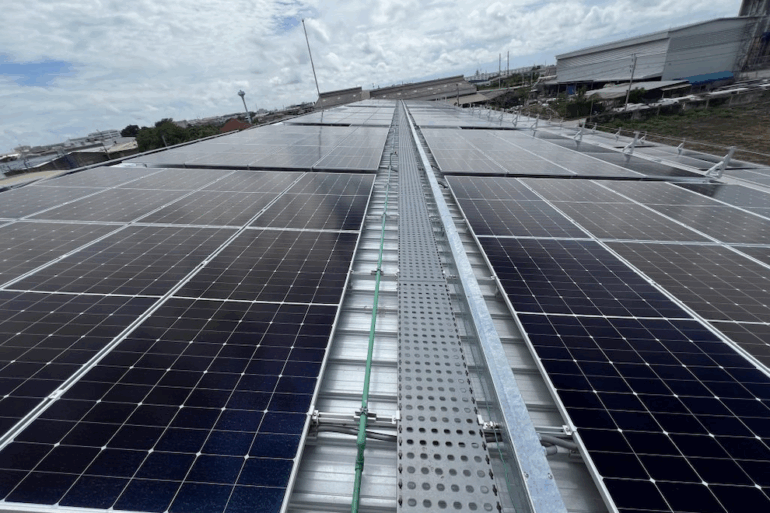
Solar at scale is cutting operating costs for energy‑intensive enterprises by lowering energy bills, shaving demand charges, and locking in long‑term price certainty — often delivering payback in just a few years when paired with smart financing and storage.
Critical Factors
- Key considerations include your current exposure to demand charges, the availability of suitable roof or land space, the expected interconnection timelines, and whether to pair the system with battery storage.
- Decisions to make include whether to own the system or use a PPA/lease, whether to add storage for peak shaving, and whether to phase projects facility‑by‑facility or pursue a portfolio‑wide rollout.
- Clarifying questions: What percentage of your bill comes from demand charges? Are your roofs structurally sound for installation? Do you have the tax appetite to utilize incentives like the Investment Tax Credit (ITC) or Modified Accelerated Cost Recovery System (MACRS)?
Large onsite solar reduces the volume of grid electricity purchased and, crucially for many industrial and logistics sites, lowers demand charges by shaving short, high‑power peaks — often the single largest line item on commercial bills. Pairing solar with batteries multiplies value by shifting solar energy into late‑day peaks and participating in grid programs that pay for flexibility. These mechanisms are the primary drivers of enterprise ROI.
Large companies also use solar to hedge against volatile retail rates and capture incentives (federal/state tax credits, accelerated depreciation) that improve project economics. Recent industry tracking shows major tech, retail, and manufacturing firms are aggressively adding solar and storage to their portfolios, with corporate procurements and storage deployments growing rapidly.
Real Examples
- Amazon and Target have deployed hundreds of megawatts across fulfillment centers and stores to lower site energy costs and meet renewable targets; these projects are part of multi‑GW corporate pipelines.
- Google and Meta pair solar with storage to shift consumption away from peak hours and to provide resilience for critical operations, reducing both energy and demand‑charge exposure.
- Retail and logistics operators often use rooftop and carport arrays to offset daytime loads and reduce on‑site consumption during peak pricing windows—an approach documented across multiple enterprise case studies.
How Savings Add Up
| Mechanism | Primary Benefit | Typical Impact |
|---|---|---|
| On-site generation | Lowers kWh purchases | 10-50% of site energy use offset |
| Demand-charge reduction | Cuts peak billing components | High value for warehouses/data centers |
| PPAs/ownership | Price certainty or tax benefits | Fixed energy cost or tax-driven NPV gains |
| Storage pairing | Peak shaving; resilience | Multiplies savings; enables grid programs |
Best Practices
- Start with an energy audit and interval meter data to size systems for demand‑charge relief.
- Phase projects across facilities to spread capex and learn from early deployments.
- Use performance guarantees and operations and maintenance (O&M) contracts to protect long‑term yield.
Risks & Limitations
- Interconnection delays and permitting can push timelines and erode near‑term savings.
- Roof age/structural limits may require reroofing before installation, increasing upfront cost.
- Financial structure matters: Power purchase agreements (PPAs) reduce capex but also reduce tax‑credit capture; ownership requires tax appetite to use ITC/MACRS. These tradeoffs affect payback and ROI.
Final Thoughts
For energy‑intensive enterprises, solar (especially when paired with storage and smart controls) is a proven way to cut operating costs, reduce exposure to volatile rates, and meet sustainability goals—provided projects are sized to address demand charges, executed with tight documentation, and financed to match corporate tax and cashflow profiles.