
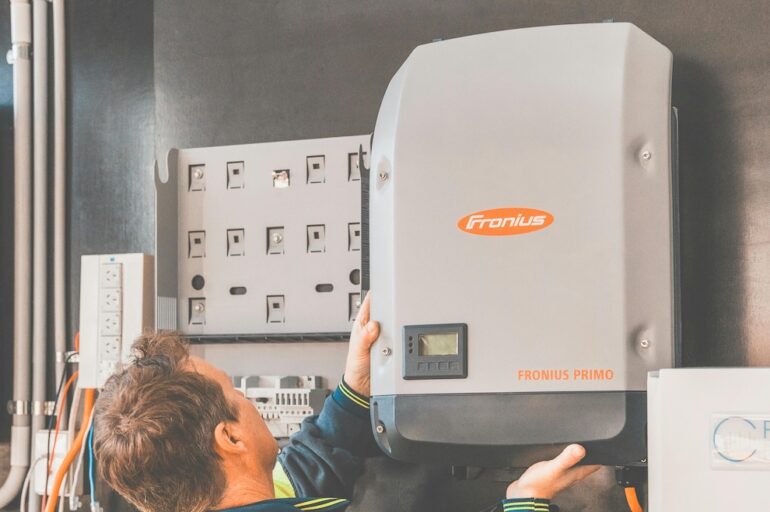
If you own a home solar system, you’ve probably wondered how long everything will actually last. Solar panels get all the attention for their 25-to-30-year warranties, but they are rarely the first thing to fail. In most residential setups — grid-tied systems without batteries — the inverter is almost always the component that needs replacement first.
The First to Go
A typical string inverter (the box that converts the DC electricity from your panels into AC power for your house) is rated to last 10 to 15 years. That’s not a defect; it’s physics. Inverters contain capacitors, fans, and sensitive electronics that work hard every sunny day. Heat, humidity, and constant voltage fluctuations wear them out faster than the solid-state solar modules on your roof. Microinverters and power optimizers tend to last a bit longer — often 20–25 years — but even those carry shorter warranties than panels.
Batteries, if you have them, usually come in second. Most lithium-iron-phosphate (LFP) storage systems are warrantied for 10 years or roughly 6,000 cycles. Without batteries, the inverter takes the top spot.
Mounting racks, wiring, and connectors can easily outlive the inverter by decades if installed correctly. Panels themselves degrade slowly—about 0.5 % per year—so even after 25 years they still produce roughly 80–85 % of their original output. When the inverter dies, your system simply stops feeding power to the house, even though the panels are still generating electricity.
Get Your Energy Independence
Warning Signs and When to Plan
Signs your inverter is on its way out include sudden drops in daily production, error codes on the monitoring app, unusual noises, or a complete shutdown on hot afternoons. Most quality inverters (Enphase, SolarEdge, SMA, Fronius) come with 10- or 12-year warranties; some now offer 15-year extensions for a modest upfront cost.
Smart planning means budgeting $1,500–$3,500 for a full inverter replacement (including labor) around year 10–12. Many installers now recommend buying an extended warranty or choosing a modular microinverter system so you only replace failed units instead of the entire string.
Your solar panels will probably still be humming along when it’s time for that first inverter swap. Treat the inverter as the “heart” of the system—reliable, but not immortal. Schedule a professional inspection every five years, keep your monitoring app updated, and you’ll stay ahead of the only major service most solar owners ever need.